Searching for Atmospheric Escape on Two Hot Jupiters (2025 – present)
Advisor: Dr. Jessica Spake
We recently observed a transit of a low-density hot Jupiter with the Magellan Inamori Kyocera Echelle (MIKE) spectrograph, which covers the absorption lines of calcium, sodium, and hydrogen through Hα. We analyzed this together with MIKE data on a third planet known to have a helium outflow, but we do not find signs of hydrogen or metal escape on any of our targets. This work was presented at AAS 247 and will appear in an upcoming publication.
High-Resolution Ground-Based Direct Spectroscopy (2024 – 2025)
Advisors: Dr. Jerry Xuan, Prof. Dimitri Mawet
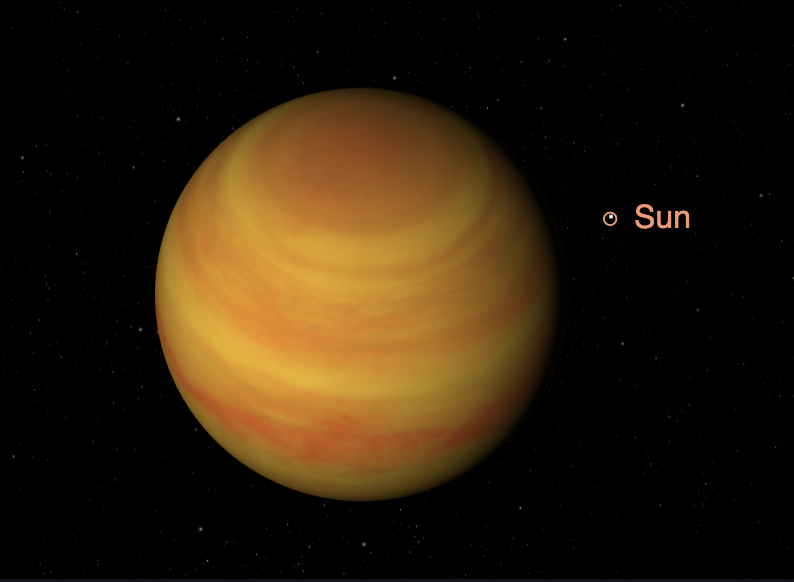
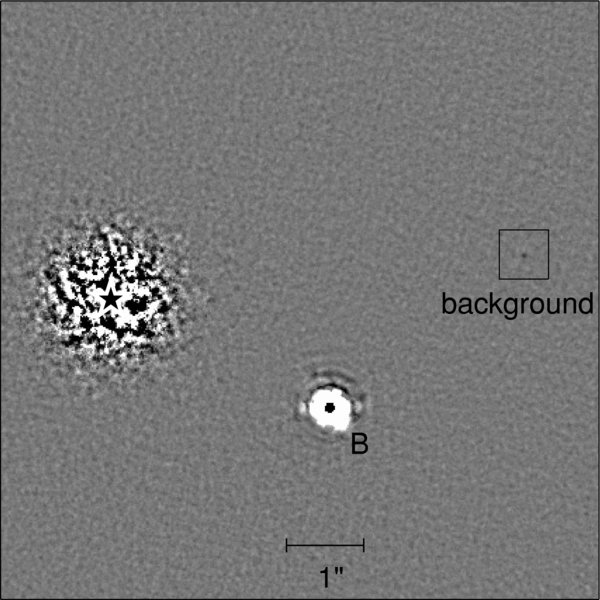
I studied the brown dwarf CD-35 2722 B and its M dwarf host star, a system in the nearby AB Doradus Moving Group. I analyzed high-resolution ground-based spectra of both objects from the Keck Planet Imager and Characterizer. I compare the chemical makeup (metallicity and carbon isotopologue ratio) of the two objects, finding that they are consistent. Combined with the system’s properties, this paints a consistent picture in which the brown dwarf formed via gravitational instability. Published in Wang et al. (2026).
Reducing 1/f Noise for JWST’s Near-Infrared Detectors (2023 – present)
Advisor: Dr. Néstor Espinoza
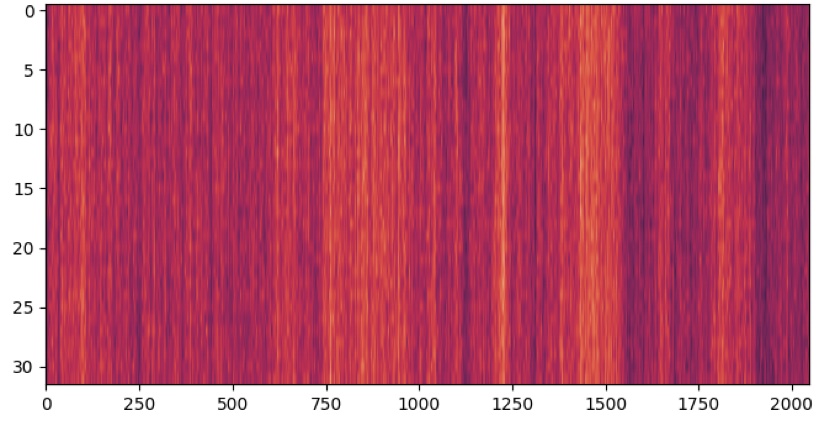
Currently, 1/f noise is the largest contributor to the noise floors of the James Webb Space Telescope’s near-infrared detectors. It manifests as vertical bands on collected images, similar to the simulated image shown here. Existing correction methods for NIRSpec and NIRISS/SOSS, two workhorse instruments for exoplanet observations, can be largely categorized as variants of “destriping” which involves subtracting a constant value per column. This project explores further reducing 1/f noise through a Bayesian-based framework by taking advantage of the noise’s well-measured properties. Tests on real data however show this does not improve NIRSpec’s band-integrated light curve precision. There is a greater potential of a 40-50% improvement for NIRISS, which currently suffers even more from 1/f noise.
Unlocking the periods and masses of two young long-period planets (2023 – present)
Advisors: William Balmer, Dr. Laurent Pueyo
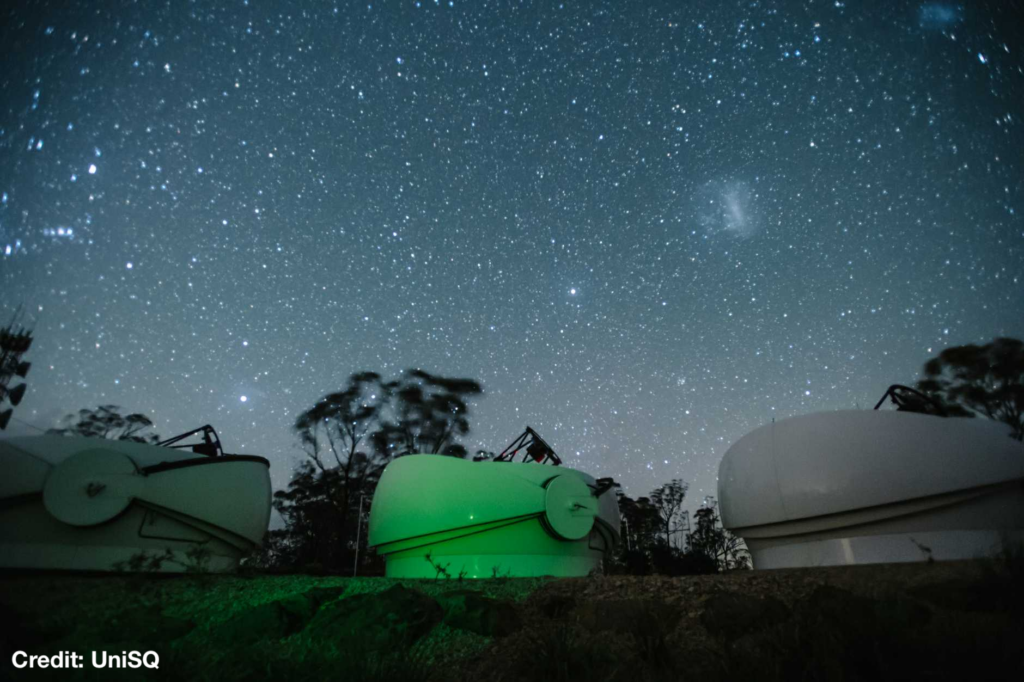
Young planets are key to understanding planet formation and evolution, but the elevated activity of their host stars hinders precise characterization. As of 2022, there are only about a dozen transiting planets with ages less than 30 Myr, and even fewer with both mass and radius measurements. We identified two long-period planet candidates from TESS observations of a 15 Myr star, and if confirmed, this will become the youngest known multitransiting system. We are using the MINERVA-Australis array (pictured to the right) to monitor the star’s radial velocity. We aim to measure the mass of each planet to 15% precision, thus placing constraints on their formation pathway through radius evolutionary tracks. NOIRLab program abstract here.
A Revised Density Estimate of the Largest Known Exoplanet (2023 – 2025)
Advisors: William Balmer, Prof. David Sing
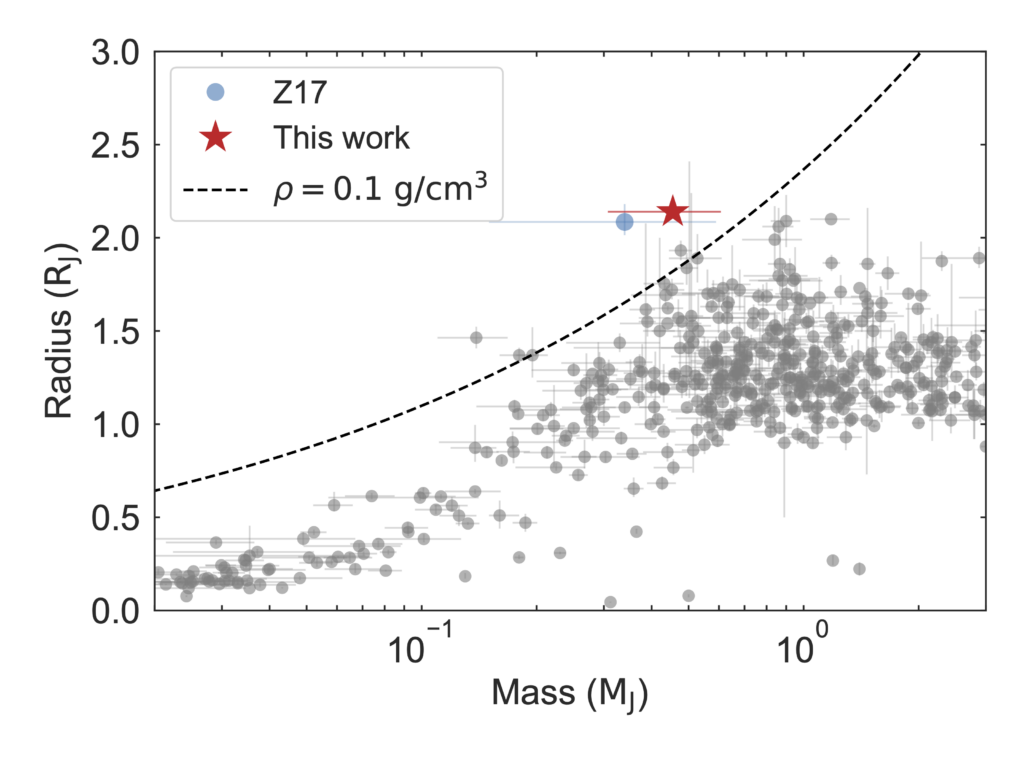
HAT-P-67 b is an extremely low-density Saturn, previously constrained to have a density less than 0.9 grams per cubic centimeter. Due to the host star’s activity, this was only a 1 sigma upper bound. Theories of hot-Saturn evolution predict that such low-density planets are destroyed within 100 million years (Myr), explaining why we do not see many of them. In this project, we use photometric data from TESS and radial velocities from WIYN/NEID to precisely measure the mass and density of HAT-P-67 b, finding a density of 0.6±0.2 grams per cubic centimeter. This confirms it as being the second-lowest density hot planet. We are lucky to catch the planet in a rare transitory phase, with its host star having recently left the main sequence. The planet’s atmosphere is expected to be lost in just 50 Myr, and tidal disruption or engulfment will occur within 500 Myr. Published in Wang et al. (2025).
A Blind Search for Transit Depth Variability with TESS (2022 – 2023)
Advisor: Dr. Néstor Espinoza
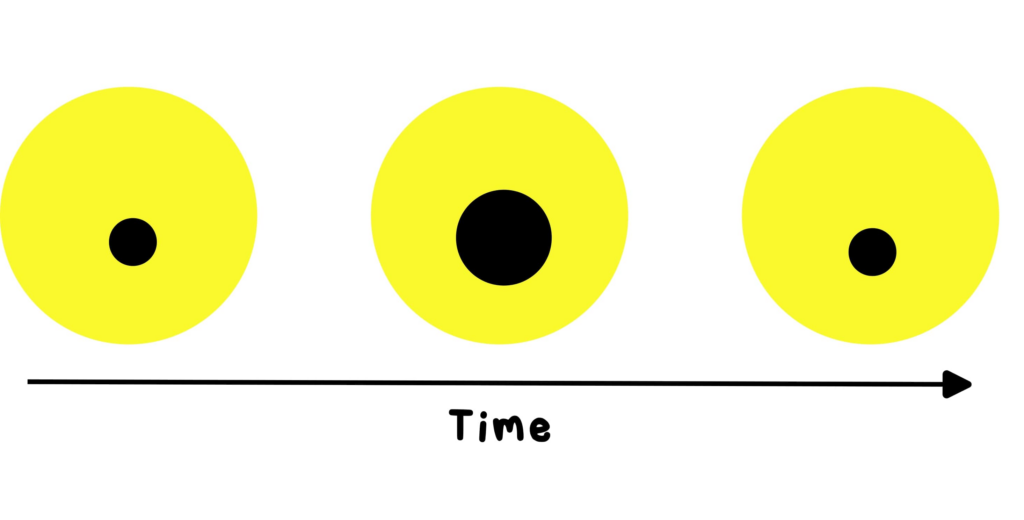
The Transiting Exoplanet Survey Satellite (TESS), although designed to discover new exoplanets, can offer equally if not more valuable insights on the population of known planets. In this project we use TESS data to study variations of transit depth as a function of time, probing mechanisms such as stellar activity, atmospheric variability, and orbital precession. We identify four planets with apparent depth variability and explain the most likely causes. Preliminary results presented at AAS DPS54; complete results published in Wang et al. (2024).
Junior Member of the TESS Follow-up Observing Program (2020 – 2022)
Advisor: Dr. Karen Collins
As a member of the Seeing-Limited Photometry group, I reduced photometry collected by telescopes in the Las Cumbres Observatory Global Telescope Network and helped discover 12 exoplanets using the transit method. These included hot Jupiters, sub-Neptunes, and a temperate earth-sized planet. Parts of this research were presented at the Society for Astronomical Sciences Symposium, and resulted in 24 co-authored works.